Why we built The Agentics instead of just advising
A venture studio can sound clever from the sideline or step onto the field. We chose to help build The Agentics, and here is why that was no accident.
There is a comfortable seat in this market: the advisor's. You walk in, listen, sketch a roadmap on a whiteboard, and leave before the hard weeks begin. The advice is often not wrong. It simply carries no consequence.
When the chance came to build The Agentics, an agentic venture builder, we could have taken exactly that seat. We know the patterns, we have the network, we could have marked up a deck and sent an invoice. Instead, Dennis Weidner co-founded The Agentics with a partner, and Weidner Ventures backs it. That is a distinction we refuse to bury in a footnote.
Advising means pointing, building means owning it
Advice costs the person giving it nothing. When the assumption proves wrong, someone else carries the loss. That asymmetry is precisely why so much consulting sounds brave and so little of it is ever tested. Builders cannot afford the comfort. Every thesis about agentic systems, about the division of labor between people and machines, about the economics of a multi-agent operation becomes a decision with a cost attached: to the roadmap, to the team, to the capital at work.
Advisors stay right. Builders get corrected. We wanted to get corrected.
The Agentics is deliberately not an agency. It is a venture builder that brings companies into being on agentic foundations. The appeal is not the buzzword but the operating question underneath it: how do you run an organization where software agents do real work without handing responsibility to a black box? You do not answer that in a talk. You answer it in operations, every day, on real products.
Slabhit as proof in the open
The first of those products is Slabhit, a live-commerce platform: interactive selling, real-time discovery, creator-led commerce. Slabhit runs on agentic rails, but the emphasis sits on two words: human-governed. The agents curate, react, and scale the moments where selling turns into entertainment. People keep the wheel, over tone, over limits, over what gets shown and what does not.
That architecture is not a cautious compromise. It is a design choice. A multi-agent operation without human governance is fast but not accountable. For a product that speaks directly to buyers and creators, accountability is not a feature; it is the precondition. We could have asserted this in a strategy memo. At Slabhit, we have to ship it.
Why this belongs inside a studio
The obvious objection: why build at all when specialized teams exist? Because knowledge that never passes through your own operations stays shallow. A studio that only writes checks and hands out opinions ages quickly. A studio that builds learns at the speed the market actually moves, and can pass that learning to the next investment.
This is why The Agentics does not sit in isolation. What we learn there about agentic operating models feeds the day-to-day work at Weidner & Friends and shapes how we assess future participations. That is the real purpose of a venture studio: not to manage a portfolio, but to build shared operating muscle that every venture draws on.
Advising would have been easier. It would also have been more forgettable. We built The Agentics because the interesting answers in this market are not written on whiteboards. They emerge where someone stands behind the decision.
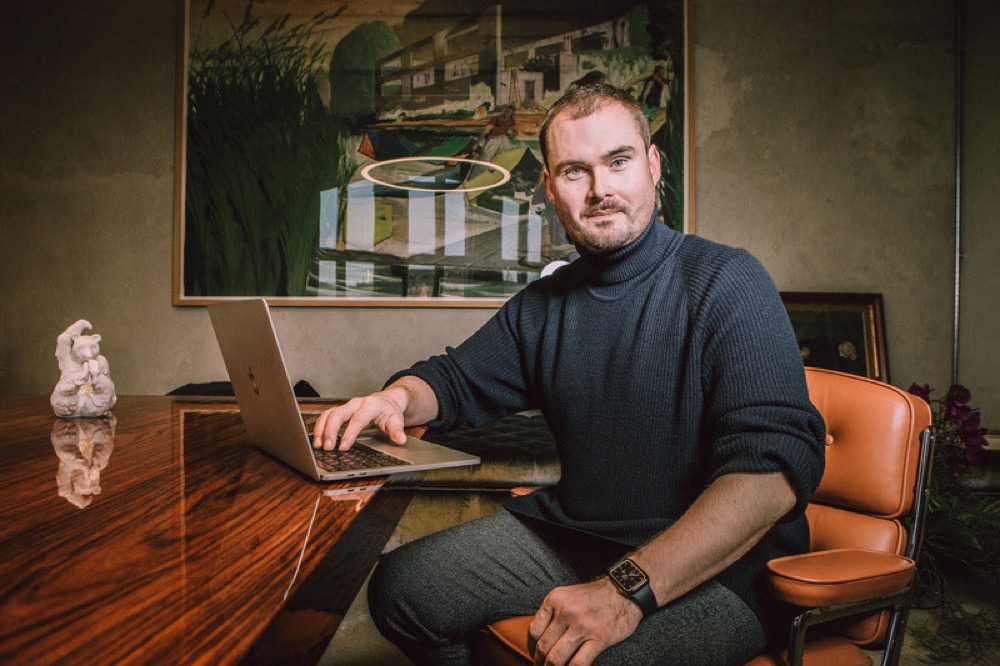
Founder, Weidner Ventures
Dennis Weidner invests his own capital and his own work in digital ventures.