Knowledge for Equity: how we invest knowledge, not just money, and why it's fair
Airtime for equity helped make Zalando big. We trade something else: build work, marketing and knowledge. How the model works, why it is legal, and why cash investors are not worse off.
When ProSieben started investing airtime instead of money into startups in 2009, it sounded like a trick. Today media-for-equity is textbook material, and the case list runs from Zalando to Trivago to eDarling: the broadcaster contributed reach at list price, the startup contributed equity, and both sides knew exactly what the service was worth.
We do the same, with a different raw material. Instead of advertising seconds we contribute what growing companies need most urgently and buy at the highest prices: growth strategy, performance marketing, brand building, hands-on execution. We call it Knowledge & Work for Equity. The work is delivered by our operating arm Weidner & Friends; the stake is held by the holding. That separation is not incidental. It is the core of the structure.
Why work never goes directly into share capital
Germany has a peculiarity you need to know here: work cannot be contributed to a GmbH as a contribution in kind to its share capital. The legal principle sits in Section 27 (2) of the German Stock Corporation Act and applies to the GmbH accordingly: services are not eligible as contributions in kind. Anyone offering to turn "work as a capital contribution" directly into shares is building on sand.
That is why our model runs through two separate, entirely ordinary contracts. First, a service agreement: a defined work package, priced at market rates, with proof of performance and acceptance. Second, a convertible loan: the fee claim is not paid out but left standing as a loan, converting into equity at the next financing round, on the same terms as the convertibles of the other investors.
50,000 euros of work is 50,000 euros of cash. Same valuation, same terms, same shares. Anything else would be unfair.
Germany's Federal Court of Justice has confirmed that this separation holds. In the so-called Qivive ruling (BGH, judgment of 16 February 2009, II ZR 120/07) it decided: paid services by a shareholder are not a hidden contribution in kind, precisely because services are not eligible as such contributions in the first place. A cleanly paid service agreement alongside a shareholding is permissible. One formality remains: whether convertible loans require notarization is not conclusively settled; the cautious notarize (Rödl & Partner). We are among the cautious.
The fairness question, answered honestly
Every good business angel who invests cash has to ask: am I worse off when someone else enters with work instead of money? The answer hangs on four points, and we put them on the table in every deal:
First, the valuation. The work package is priced at arm's length, meaning what an external provider would charge for the same service. No fantasy hours, no founder discounts into one's own pocket. Second, the terms. Our convertible gets exactly the conditions of the round's other convertibles. Third, the proof. Only what has been delivered, documented and accepted by the company converts. Deliver less, and less converts. Fourth, transparency. The deal is openly presented to and approved by the shareholders.
Economically, the model is even attractive for cash investors: their money flows entirely into product and team, while growth work enters the company on top, without burning runway for it. That is exactly why the media-for-equity logic prevailed, and exactly why it works the same way with knowledge and work.
Who this is for
Knowledge & Work for Equity is not a substitute for a financing round but a complement: for teams that have raised or are raising capital and whose bottleneck is not only money but marketing, building and experience. If that sounds like your situation, it is worth a pitch.
Note: this article is an entrepreneurial assessment, not legal or tax advice. The concrete structure of any deal belongs with a lawyer and a tax advisor.
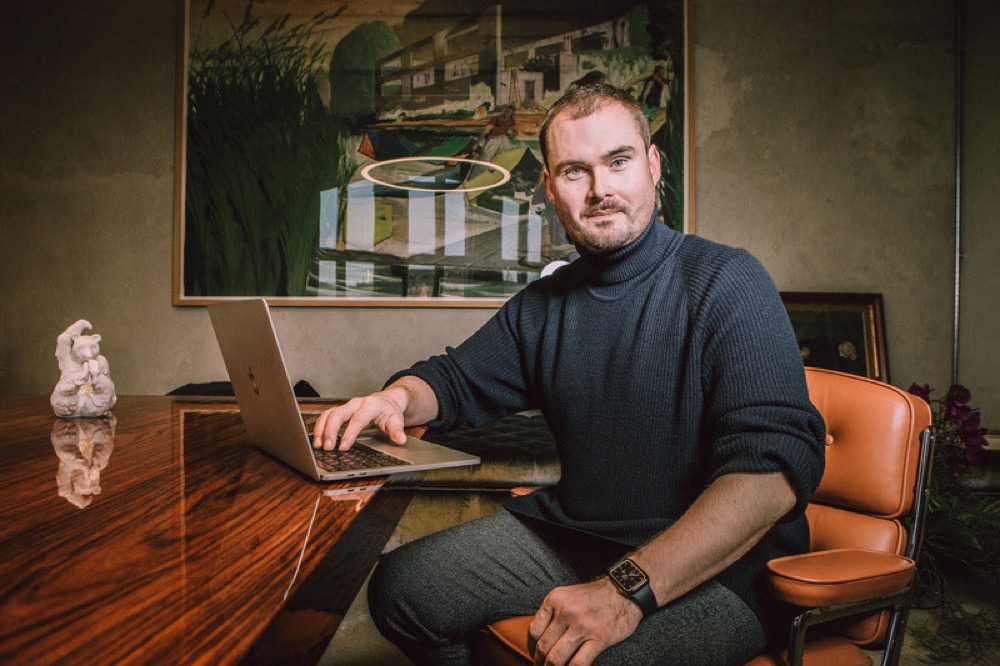
Founder, Weidner Ventures
Dennis Weidner invests his own capital and his own work in digital ventures.