AI agents as an investment thesis: where value really forms in 2026
Only a few can win the capital battle over foundation models. For everyone else, value forms one floor up: with agents that complete real work. Three filters we invest by.
Most conversations about AI investing in 2026 happen on the wrong floor. The model layer, the large foundation models, is a capital battle only a handful of corporations with billion-dollar budgets can fight. As an investment thesis for everyone else, it fails. The interesting question is not who builds the best model, but who uses the existing models to complete real work and gets paid for it.
That is the agent floor: software that does not just answer but acts. That does not summarize a ticket but resolves it. That does not suggest a campaign but sets it up, monitors it and adjusts it. Between an impressive demo and an agent a company pays for every month lies a long road, and it is precisely on that road that value separates from noise.
Three filters we look through
First: completed work, measurable. The question for every agent product is: what work is demonstrably done afterwards that a person had to do before, and what was it worth to the customer? If the answer is measured in demo minutes rather than completed cases, it is a toy. Agent washing, meaning conventional software with a renamed chatbot, fails this question instantly.
Second: owned distribution. The models underneath have become interchangeable, and their prices keep falling. What is defensible is owning the access to the customer: the workflow, the data, the integrations, the brand. A thin wrapper around someone else's model without an owned channel is not a company; it is a feature the next platform release swallows.
Third: governance by design. Agents that take over real work need human control, not as a fig leaf but as architecture: clear limits, traceability, a person who can intervene and remains responsible. That is not a compliance topic; it is a sales precondition. No serious business hands its processes to a black box.
The question is not who has the best model. The question is whose agent has completed paid work by the end of the month.
Why we do not know this only from decks
These filters do not come from a market study but from our own operations. Through The Agentics we back a venture builder that creates companies on agentic foundations, with Slabhit as its first product in live commerce. There we see daily what agents can do reliably, where they fail, and what customers actually pay for. That operating knowledge is our real edge in investing, more than any market forecast.
What does that mean in practice? We prefer teams that fully solve a narrow, economically relevant use case rather than promising a platform for everything. That know and can price their unit of work. That take distribution more seriously than model benchmarks. And that treat governance not as a brake but as the feature that makes selling to serious customers possible in the first place.
The rest is discipline: small tickets, close to the team, with knowledge and work as part of the investment where it serves the company more than money alone. If you are building something like this, show us.
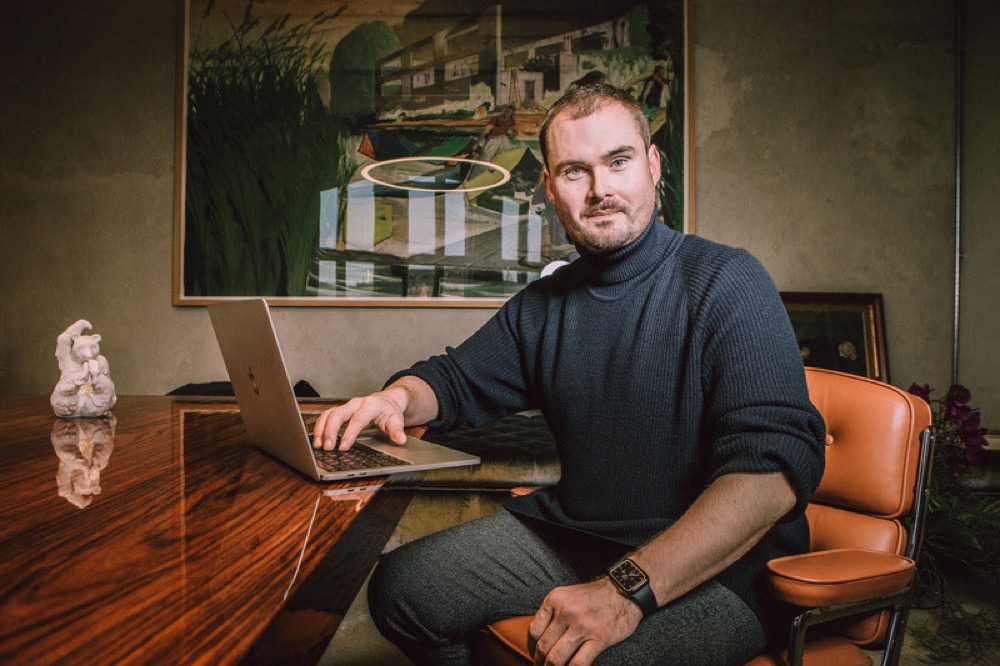
Founder, Weidner Ventures
Dennis Weidner invests his own capital and his own work in digital ventures.