The network as capital: why operators are worth more than money
Almost any good team can raise capital today. What stays scarce are people who have built the thing before. On the kind of capital that does not sit in a bank account.
Ask a founder what made their last difficult week difficult, and you rarely hear "money." You hear: we hired the wrong first salesperson. We burned three months on a channel that was never going to work for this product. We did not know what a corporate buyer actually asks.
Those are not capital problems. They are experience problems. And you cannot wire experience.
Why money is the most interchangeable thing in a deal
A euro from us is exactly the same euro as anyone else's. Capital has no opinion, no memory and no phone number. In a market where good teams receive several offers, money is therefore the first thing you agree on and the last thing that makes a difference.
Capital decides whether a team can keep going. People decide whether it gets better along the way.
So before any investment we ask a second question alongside valuation: who can we bring to this table that the team could not get otherwise? If we have no convincing answer, we are probably the wrong investor, even when the company is good.
What an operator actually brings
By operator we do not mean the board seat that offers an opinion twice a year. We mean people who have built, sold, or crashed the same thing themselves. Their value sits in three things no amount of capital replaces:
Pattern recognition. Someone who has watched twenty sales teams grow sees in week two what a founder learns painfully in month six. That does not save money, it saves time, and time is the one resource a startup cannot raise more of.
Access with credit attached. A cold enquiry to a corporate lands in an inbox. The same enquiry via someone who has already delivered there lands in a meeting. The difference is not a trick; it is accumulated trust that someone spends on your behalf.
Honesty without an agenda. People who have founded companies themselves are more likely to tell a team the numbers do not hold than someone focused on the next round. That honesty is uncomfortable and usually exactly what is missing.
How our network came about
Networks cannot be bought, only accumulated. Ours grew over years out of operating work: out of Weidner & Friends, where marketing and build projects run for very different companies. Out of Cryptoticker, which rooted us in finance and crypto assets. Out of The Agentics, where we build agentic systems ourselves. And out of Gründerfreunde, a circle of people who recommend, warn and help each other long before a term sheet is on the table.
That same circle staffs our weekly investment committee: Dennis Weidner and befriended business angels who review incoming pitches together. The effect is twofold. A team gets more than one person's opinion, namely several experienced perspectives from different industries. And when an investment happens, more than one person already knows the venture and can help.
Network as part of the investment, not a nice-to-have
Many investors describe their network as an add-on, a bonus alongside the actual cheque. We see it the other way round. Our Knowledge & Work for Equity model even makes that stance contractual: what we contribute in knowledge, work and access is valued, documented and forms part of the investment. Not a promise in a pitch, but a line in an agreement.
That disciplines both sides. We have to name what we actually deliver. The team can check whether we delivered it. And where we can only contribute money, we say so and contribute money without selling ourselves as something else.
What this means for founders
Ask every investor you speak to for names. Not for the size of the network, but for exactly who they would call about your specific problem, and when that person last delivered. Whoever answers quickly and specifically has a network. Whoever gets general has a contact list.
You will find money in several places. People who have already solved your problem, far more rarely. Tell us what you are stuck on.
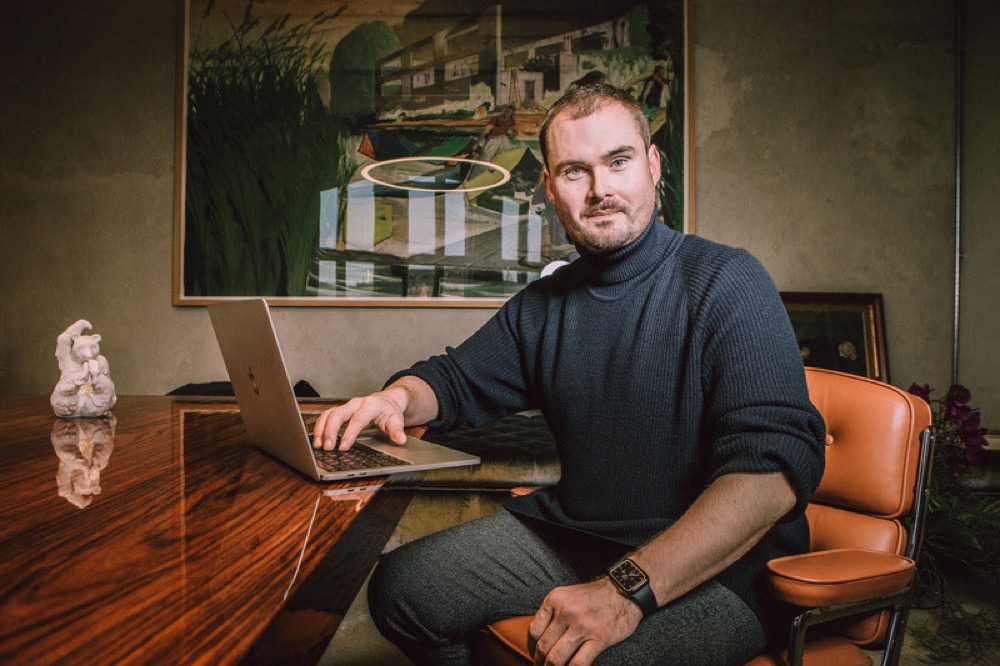
Founder, Weidner Ventures
Dennis Weidner invests his own capital and his own work in digital ventures.