How our investment committee decides
Most founders never learn why an investor said no. Here is our process in the open: what counts in review, how fast you hear back, and what a no means with us.
The most unpleasant part of fundraising is rarely the rejection. It is the silence before it. Weeks without an answer, then perhaps two sentences without reasons, and a team knows no more afterwards than before.
That cannot be avoided entirely, but it can be much better. So here is our process, as honestly as it actually runs.
Once a week, together
Submissions accumulate and are reviewed once a week, together: Dennis Weidner and befriended business angels from a network grown over many operating years. This is deliberately not a single person's decision. A sector one of us does not understand is often precisely the one another has worked in for ten years.
The fixed rhythm serves a second purpose: it stops pitches sitting around until someone happens to have time. Submit on Tuesday and you are in that same week's review.
What actually counts in review
We do not read a deck front to back looking for formal mistakes. We look for four things:
Is there a real problem? Not: is the idea original. Rather: are there people or companies losing money, time or sanity today because this solution does not exist. A clearly named problem beats impressive technology without an addressee.
Why this team? We care less about the CV than about why these particular people are working on this particular thing. An unfair advantage can be experience, access, years of proximity to the problem, or simply obsession. It should be nameable.
What already exists? Users, revenue, pilot customers, a prototype, a waiting list. We do not expect large numbers at early stages. We look at how much a team made out of what it had.
Can we contribute more than money? With otherwise equal substance, that question often decides yes or no. Where we can bring building, brand, performance marketing or access, we are a better partner than a pure capital provider.
Short and honest beats long and polished. We have never turned anyone down because the deck was too plain.
What happens next
Selected teams are invited to a short virtual pitch. Not an assessment centre, a conversation: where are you, what is stuck, what would you do with the next money. We ask the uncomfortable questions there too, because they are coming anyway.
You hear from us within one to two weeks. We deliberately do not promise "within 48 hours": the committee meets weekly, and when we look at a deck seriously we sometimes need one more round. The commitment we give is the one we can keep.
Four possible answers, not two
With most investors there is yes or no. With us there are four ways, and the question is rather which one fits:
Cash for the classic stake, usually smaller tickets, often alongside other business angels. Knowledge & Work for Equity when your bottleneck is not money but marketing and building. A convertible as a fast bridge that converts at the next round. And tokens, where Web3 creates real value.
That is exactly why the "preferred model" field in the form is worth filling in, even if you select "open". It tells us what you actually need right now.
And if it is a no
Then you get it from a human being, with reasons. Usually those reasons are not "bad company" but: too early for us, outside what we can judge, or we would have nothing to contribute here beyond money. That is not politeness, it is useful information: a no for the third reason means another investor may be exactly right.
And a no is not a permanent verdict. Several conversations that later became something began with a rejection and a "come back when X is in place".
Send us your deck or a few sentences. It will be on the table at the next committee.
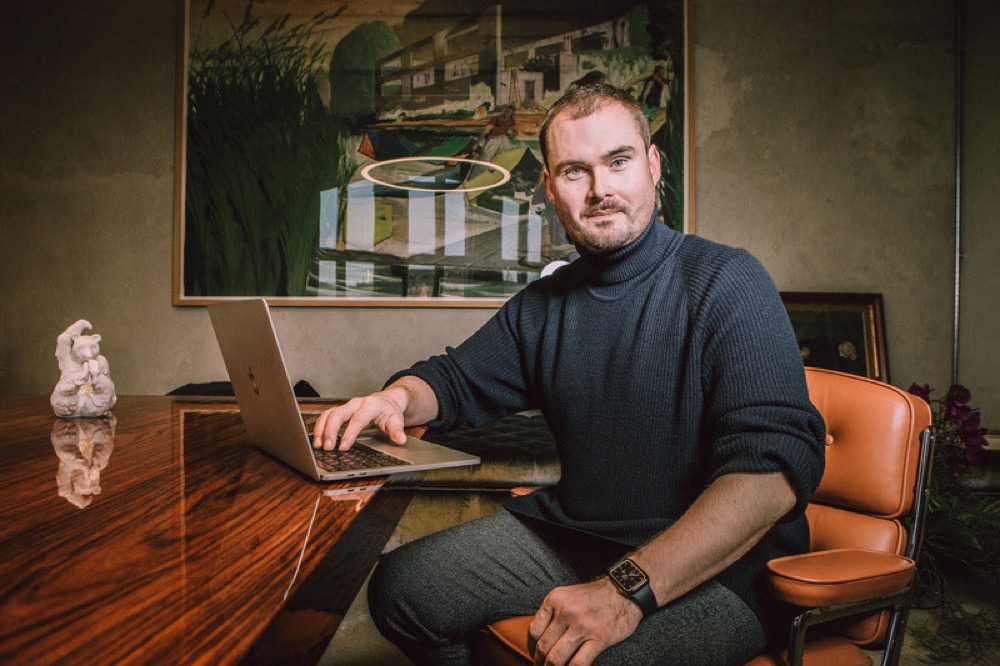
Founder, Weidner Ventures
Dennis Weidner invests his own capital and his own work in digital ventures.