Deep tech we understand: how we spot a real edge
In many pitches a patent ends the discussion about competitive advantage. With us it starts there. What we check, what we rate higher than IP, and what we do not trust ourselves to judge.
Deep tech is the sector with the widest gap between claim and verifiability. With an online shop you can see within an hour whether people buy. With a new process, a materials approach, a sensing principle, what you first see is a deck and a confident team.
So we have got into the habit of not discussing the technology in deep tech conversations, but its durability. The interesting question is rarely "does this work". It is "what stops somebody else from doing it better in two years".
A patent is a signal, not a moat
In many pitches the patent stands as proof of the edge. Two facts from patent law temper that, and both can be looked up.
First, publication. Under Section 31 of the German Patent Act (PatG), the file of a patent application becomes publicly accessible once eighteen months have elapsed since the filing date or, where an earlier date is claimed, since that date. From then on your process is readable by every competitor, in the level of detail that was needed to make it reproducible. A patent does not prevent imitation; it makes imitation actionable. That is a difference a competitor in a jurisdiction where you will not litigate exploits quickly.
Second, durability. Under Section 59(1) PatG, anyone may file an opposition against the patent within nine months of the publication of the grant. A freshly granted patent is therefore a claim still open to argument, not settled property.
A patent says you invented something. It does not say you can build it twice.
Our question is therefore not "do you have IP" but: what protects you during the eighteen months until publication, and what remains if a central claim falls in opposition proceedings? Teams with a good answer usually have more than a patent.
What we rate higher than the filing
The edge we take most seriously appears in no patent document, because it cannot be written there: operating knowledge. The process parameters at which yield collapses. The order in which you bring a plant up. The catalogue of mistakes you made once and will not make again. Whoever has got a thing running twice owns something nobody reads out of a publication.
In practice we ask about the last failure. What did not work, why, and what changed as a result. The answer is a better indicator than any roadmap, because it cannot be invented without experience. Teams that answer that question with successes only have either not built enough yet, or are not telling us everything.
The bottleneck is rarely the physics
Most deep tech ventures we see fail do not fail on the technology. They fail on what comes after it. So the same four points always end up on the table.
Approval. Does your product need a permit, a certification, a proof, and how long does that actually take? An approval path is a competitive moat once you are through it, and a funding gap while you are still in front of it.
The supply chain. Does your production depend on a component from a single manufacturer? Then your margin is that manufacturer's decision.
The purchasing cycle. Industrial customers do not buy when the product is ready but when their budget allows. A sales process spanning several quarters is not a sales problem, it is a requirement on your capital planning.
Tellability. Can someone who is not an expert say in two sentences why this is better? If not, financing gets expensive regardless of how good the engineering is.
What we honestly cannot judge
Here belongs a sentence investors rarely write. We are operator investors, not laboratory assessors. With deep materials research, with clinical endpoints, with semiconductor process physics, our own competence to judge ends, and we know where it ends.
In those cases we bring in someone who can judge it, or we pass. Such a no is not an assessment of your company. It is precisely the third reason we described in How our investment committee decides: outside what we can assess. Anyone receiving that no should read it as a pointer that a specialised investor is the right addressee, not as a verdict on the substance.
Where we do contribute
What we can do is the second half of the road. A working process does not become a company while nobody organises demand. Brand building, positioning, performance marketing, sales build-up, and access to people who have already bought in your target market: that is the work we can contribute, and not as advice but as a delivery under contract. How we value it and translate it into a stake is set out in Knowledge for Equity. If what you need first is the people, the argument is in Network as capital.
If you are working on something hard to explain and hard to copy, that is exactly what we like talking about. Tell us what is stuck.
Note: this article is an entrepreneurial assessment, not legal or patent advice. The provisions cited reflect the legal position as at 7 August 2026.
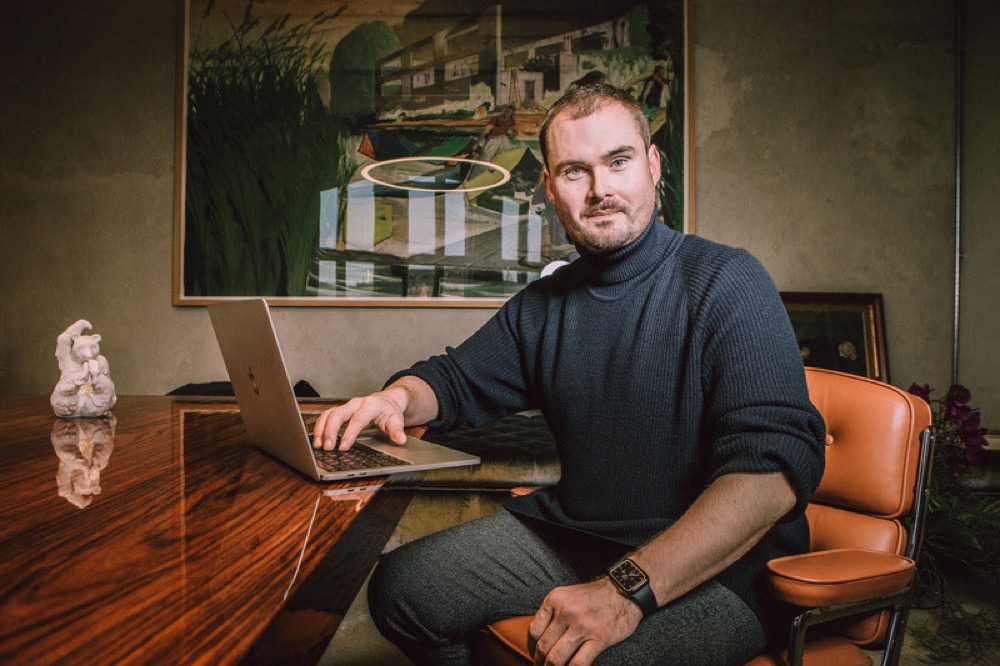
Founder, Weidner Ventures
Dennis Weidner invests his own capital and his own work in digital ventures.